 Aleksandra Koszela, Product & CX Strategist at Flownally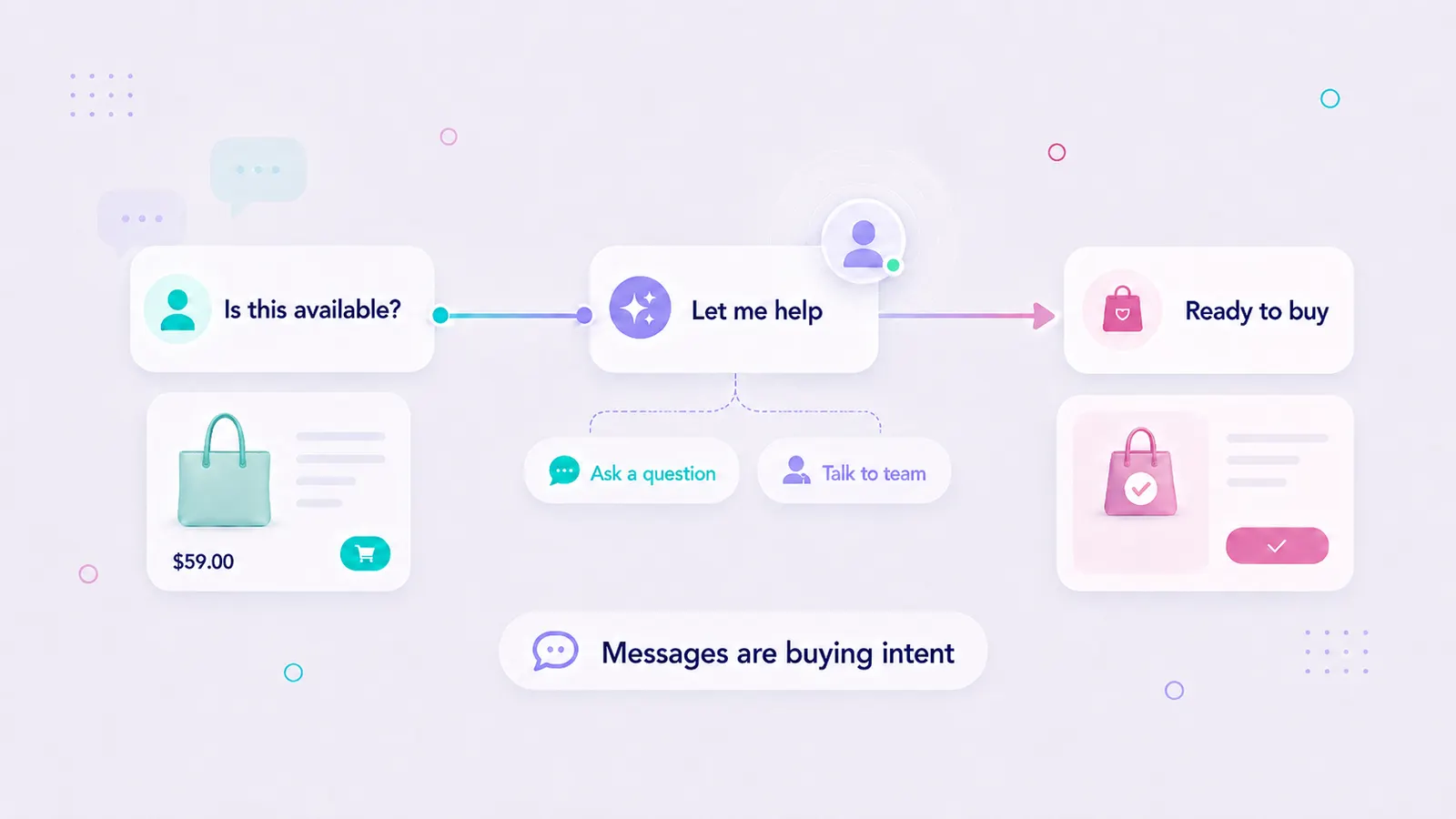
Flownally vs Manychat: Which Is Better for Ecommerce Customer Conversations?
Manychat is a strong choice for brands, creators, and marketers who want to automate social engagement, Instagram DMs, comment-to-DM campaigns, lead magnets, and simple messaging funnels.
Flownally is a better fit for ecommerce teams that need more than social DM automation. It’s built for teams that manage customer conversations across WhatsApp, Instagram, Messenger, and SMS, with automation, shared inbox, conversation history, human handoff, and follow-up journeys connected in one place.
The main difference is what each platform is built around. Manychat is social-automation-first, with strong tools for starting and automating conversations from social engagement. Flownally is ecommerce-conversation-first, designed to keep customer conversations moving from product question to human advice, purchase, follow-up, and repeat purchase.
- Manychat and Flownally both support customer messaging automation, but they’re built around different operating models.
- Manychat is strong for Instagram DM automation, comment-to-DM flows, keyword triggers, campaigns, creator funnels, and audience engagement.
- Flownally is built for ecommerce teams that need shared inbox, automation, human handoff, customer context, and lifecycle messaging in one system.
- Choose Manychat if your main goal is social engagement automation and top-of-funnel messaging.
- Choose Flownally if your team needs to manage sales, support, follow-ups, abandoned cart conversations, post-purchase journeys, and reorder reminders across messaging channels.
- Flownally is not just a chatbot. It combines automation with a shared customer conversation workspace.
- For ecommerce brands, the better choice depends on whether customer messages are mainly campaign interactions or part of the buying journey.
Flownally vs Manychat: the core difference
Flownally and Manychat can look similar at first.
- Both are connected to messaging channels.
- Both can automate replies.
- Both can help businesses respond faster.
- Both can support social and messaging workflows.
But they’re designed for different jobs.
Manychat is widely known for social automation. Its website describes automation for Instagram, WhatsApp, TikTok, and Messenger, with use cases such as automated DMs, comment replies, audience growth, and lead generation. Manychat also offers a shared Inbox for communicating with customers across channels such as Instagram, Facebook Messenger, WhatsApp, Telegram, and SMS.
That makes Manychat particularly strong when social engagement and messaging automation are central to the workflow.
For example:
- someone comments “INFO” on an Instagram post,
- someone replies to a Story,
- someone clicks a lead magnet,
- someone enters a keyword flow,
- someone joins a promotional sequence.
Flownally is built around a different operating model.
Ecommerce teams don’t only need to start conversations. They need to manage what happens after the conversation starts.
A customer may ask about a product on Instagram, continue on WhatsApp, get help from a team member, abandon checkout, reply to a follow-up, buy the product, and later receive a reorder reminder.
That isn’t just a DM funnel. It’s a customer journey.
Flownally is built for that kind of work: customer conversations, automation, shared team inbox, human handoff, conversation history, and follow-up journeys connected in one system.
Manychat vs Flownally: side-by-side comparison
Last updated: October 2026
| Category | Manychat | Flownally |
|---|---|---|
| Best for | Social automation, DM funnels, comment-to-DM, lead magnets, campaign triggers | Ecommerce customer conversations, shared inbox, automation, human handoff, post-purchase journeys |
| Core strength | Starting and automating social conversations | Managing and continuing customer conversations across the buying journey |
| Main users | Creators, marketers, agencies, social-first brands | Ecommerce teams, CX teams, support teams, sales advisors, operators |
| Channels | Instagram, TikTok, Messenger, WhatsApp, Telegram, SMS, email depending on plan and setup | WhatsApp, Instagram, Messenger, SMS, with customer conversation management in one workspace |
| Inbox | Shared Inbox with team access, conversation assignments, and workflow capabilities depending on plan | Flownally shared inbox is built around ecommerce team workflows, conversation history, handoff, and context. It also supports customer communication across multiple channels. |
| Automation & AI | Flow-based social and messaging automation with AI Step, Intention Recognition, and additional AI-assisted conversation features depending on channel and plan | Journey and chatbot automation with AI Intent Detection, conditions, waits, business events, and human handoff |
| Human handoff | Supported through Inbox and team conversation workflows | Central part of the system: automation handles predictable steps, team members step in with context |
| Customer context | Custom fields, tags, automation conditions, and contact data | Conversation history, customer context, handoff, and journey continuity in one workspace |
| Post-purchase journeys | Possible through automations and broadcasts depending on setup | Core ecommerce use case: post-purchase care, reorder reminders, abandoned cart follow-ups, repeat purchase journeys |
| Best fit | “I want to automate social engagement and DM campaigns.” | “I need my team to manage customer conversations and automate the buying journey without losing context.” |
Which is better for ecommerce: Flownally or Manychat?
Manychat is likely the better choice if social engagement automation is the center of your messaging strategy — for example, Instagram comment-to-DM campaigns, Story triggers, lead magnets, creator funnels, or TikTok automation.
Flownally is likely the better choice if customer messages are part of a wider ecommerce journey and your team needs to move between automation, human advice, purchase, support, follow-up, and repeat purchase without losing conversation context.
For ecommerce teams, the key question is not which platform has the longer feature list. It is whether you primarily need to automate social interactions or manage customer conversations across the buying journey.
Pricing: what ecommerce teams should compare
Pricing matters, but the lowest monthly price does not always mean the lowest operating cost.
Manychat and Flownally use different pricing models, so ecommerce teams should compare them based on the work they need the platform to handle.
Manychat’s current pricing varies by plan and Active Contacts, with different plans including different numbers of channels, users, Inbox seats, and advanced features. Flownally pricing is built around customer communication needs: users, active contacts, messaging channels, shared inbox, automation, chatbot setup, onboarding, support, and journey complexity.
For ecommerce teams, the pricing question should not only be:
“How much does the tool cost per month?”
It should also be:
“What does our team need to manage customer conversations without losing context?”
| Pricing question | Why it matters |
|---|---|
| How many customer contacts do we message each month? | Both tools use active contacts in their pricing model. |
| How many channels do we need? | Ecommerce teams may need Instagram, WhatsApp, Messenger, and SMS connected to the same workflow. |
| How many team members need access? | Team access and Inbox seats can materially affect the cost of a messaging setup, especially when several people need to handle customer conversations. |
| Do we need a shared inbox or only automation flows? | DM automation and team conversation management are not the same operating need. |
| Do we need post-purchase and repeat purchase journeys? | Ecommerce messaging often continues after the first sale. |
| Do we need human handoff with context? | Some customer questions need a real person, especially before high-value purchases. |
| Do we want onboarding and strategy support? | Setup quality affects how quickly the tool becomes useful. |
Because pricing can change, check the official Manychat pricing page and the Flownally pricing page before making a decision.
If your main goal is to automate social engagement, Manychat may be the more efficient starting point.
If your team needs to manage ecommerce conversations across channels, automate follow-ups, keep context visible, and hand off conversations to people when needed, Flownally may provide stronger value even if the decision is not based on the lowest entry price.
What Manychat is good at
Manychat is a strong tool when your main goal is social messaging automation.
That includes:
- Instagram DM automation,
- comment-to-DM campaigns,
- Story reply triggers,
- keyword-based flows,
- lead magnet delivery,
- promotional sequences,
- audience engagement,
- FAQ automation and AI-assisted replies,
- intent recognition and lead qualification,
- WhatsApp or Messenger automations.
For creators, educators, agencies, and social-first businesses, this can be exactly what they need.
If your main problem is:
- “People comment on our posts, and we want to send them an automatic DM.”
- “We need to deliver a lead magnet through Instagram DM.”
- or “We want to automate a simple campaign flow after someone engages with content.”
Manychat is a natural fit.
It’s fair to say Manychat is very good at turning social engagement into automated messaging flows.
Where ecommerce teams may outgrow social DM automation
Ecommerce teams often start with a simple automation problem:
- They want to reply faster.
- They want to automate repetitive questions.
- They want to stop copying the same answer all day.
But as the brand grows, the problem changes.
In 2026, ecommerce teams need to get more value from the conversations they already have. Shopify reports that customer acquisition costs are up 8.64% year over year, which makes conversion, retention, and operational efficiency harder to ignore.
The team no longer asks only:
“How do we automate this DM?”
They start asking:
- Who is handling this customer?
- What did the customer ask before?
- Did the bot already reply?
- Did someone follow up?
- Did the customer buy?
- Should this conversation go to a team member?
- Can we use this context later?
- Can we trigger a post-purchase message?
- Can we send a reorder reminder?
- Can we recover the customer if checkout is abandoned?
That is where automation setup can become limiting. Not because automation is bad. Automation is useful. But ecommerce conversations often need more than a flow. They need continuity.
Why customer conversation continuity matters
A customer journey rarely unfolds in a single clean step.
A shopper may:
- See a product on Instagram.
- Send a DM asking about size.
- Get an automated first reply.
- Ask a more specific question.
- Move to a team member.
- Receive a product recommendation.
- Add the product to cart.
- Leave before checkout.
- Reply to a recovery message.
- Buy.
- Ask about delivery.
- Receive post-purchase guidance.
- Get a reorder reminder later.
This is the kind of journey ecommerce teams need to manage.
If every step sits in a separate tool, the customer context gets weaker. The bot may know one thing. The inbox may show another. The support team may not see the campaign history. The marketing team may not know what the customer asked before buying. The follow-up may happen without context.
That creates a messy customer experience. And Flownally is built to keep those steps connected.
How Flownally approaches ecommerce customer conversations
Flownally takes an ecommerce-first approach to customer messaging. Automation is one part of the system, but conversations can also move to a team member, continue after purchase, and become part of a later follow-up or repeat purchase journey.
1. One conversation can move from automation to a person
A customer can start with an automated reply, ask a more specific product question, and then move to a team member without starting over. The team member sees the conversation context and can continue from the point where automation stopped.
This is especially useful for sizing questions, product comparisons, payment questions, delivery concerns, and high-value purchases.
2. Customer context can stay useful after the first flow
In Manychat, the focus is often on automating a campaign flow or message sequence. But in ecommerce, the same customer may also need help before purchase, after purchase, and later before a repeat purchase.
Flownally helps teams keep conversation history and customer context visible, so follow-ups do not feel disconnected from what the customer already asked or bought.
3. Post-purchase journeys can connect back to the original conversation
The conversation doesn’t have to end after checkout.
A customer who received product advice before buying can later receive product guidance, a review request, a reorder reminder, or a repeat purchase message. That matters for ecommerce brands selling products with replenishment cycles, gift moments, accessories, or repeat buying potential.
4. Teams can manage conversations, not only campaigns
Many ecommerce conversations are not owned by a single person. They may involve support, CX, sales advisors, social media, fulfillment, or operations.
Flownally gives teams one workspace for customer messages, automation, handoff, and conversation history, so customer questions do not get lost between social engagement, support, and follow-up.
Manychat vs Flownally: ecommerce examples
Example 1: Comment-to-DM campaign
A brand posts a Reel and asks people to comment “GUIDE” to receive a product checklist.
Manychat is a good fit here.
This is a clear social automation use case:
- comment trigger,
- automatic DM,
- lead magnet delivery,
- simple follow-up,
- audience engagement.
Flownally also supports messaging automation, but if this is your main workflow, Manychat may be the more natural choice.
Example 2: Product advice that needs a human answer
A customer asks on Instagram:
Is this jacket warm enough for winter?
Automation can send a first reply and collect basic context, such as size, preferred color, or delivery country.
But the next answer may need a person.
A team member can step in, review the context, recommend the right option, and continue the conversation without asking the customer to repeat what they already said.
This is where Flownally is a better fit than a simple DM automation flow. The customer gets more than an automatic reply: they get the product advice they need to feel ready to buy.
Example 3: Reorder journey for consumable products
A customer buys a 30-day skincare product. Three weeks later, the brand wants to send a reorder reminder. If the customer replies with a question, the team should see the original product, previous messages, and current conversation.
This is where customer messaging becomes more than a one-time campaign. For consumable products, reorder reminders work best when they’re connected to timing, product context, and the customer’s previous interaction with the brand.
You can read more in our guide on how ecommerce brands can automate reorder reminders for consumable products.
Example 4: High-value purchase with human handoff
A customer is interested in an expensive product. Automation collects basic information. Then a team member steps in to help with product choice, delivery, payment, or trust.
This is not just chatbot automation. It is a guided customer conversation.
Flownally is designed for that balance: bot where useful, human where needed.
Choose Manychat if…
Manychat may be the better choice if your main goal is social automation.
Choose Manychat if you need to:
- automate Instagram comments into DMs,
- run keyword-triggered flows,
- deliver lead magnets,
- build creator-style audience funnels,
- automate simple campaign replies,
- grow an audience through social engagement,
- manage straightforward DM campaigns,
- use TikTok automation as part of your messaging stack.
Manychat is especially strong when the customer journey starts with social engagement and the main goal is to automate the first response or campaign sequence.
Choose Flownally if…
Flownally may be the better choice if your customer conversations are part of your ecommerce buying journey.
Choose Flownally if you need to:
- manage WhatsApp, Instagram, Messenger, and SMS conversations in one workspace,
- connect automation with a shared team inbox,
- keep conversation history visible before a person replies,
- hand off conversations when customers need real advice,
- avoid making automation feel robotic,
- build abandoned cart recovery flows,
- create post-purchase follow-ups,
- automate reorder reminders,
- support repeat purchase journeys,
- help ecommerce teams work together without losing customer context.
Flownally is the stronger fit when messaging is part of a wider ecommerce journey and the team needs automation, human conversations, customer context, and follow-ups to work together.
Is Flownally a Manychat alternative?
Yes, for the right use case.
Flownally can be a Manychat alternative for ecommerce teams that need more than Instagram DM automation or campaign triggers. But it’s not trying to replace every Manychat use case.
For a visual overview, see how Flownally compares with Manychat for ecommerce teams.
If your business is creator-led and your main goal is social engagement automation, Manychat may still be the better fit.
If your ecommerce team needs shared inbox, automation, human handoff, customer context, and lifecycle messaging, Flownally is likely the better fit.
The question is not only whether Flownally can replace Manychat. It is which operating model better matches the customer conversations your team needs to manage.
How Flownally helps ecommerce teams move beyond DM automation
Flownally is not just a chatbot, and it is not only a shared inbox.
It combines the parts ecommerce teams usually need together:
- customer messaging channels,
- shared team inbox,
- automation flows,
- human handoff,
- conversation history,
- customer context,
- follow-up journeys,
- repeat purchase messaging.
This helps teams turn scattered customer messages into a clearer operating system.
A customer can ask a product question.
Automation can collect the basics.
A team member can step in.
The customer can continue to checkout.
The brand can follow up after purchase.
The next reorder or repeat purchase moment can happen later.
And the team can keep the context visible throughout.
That is the difference between automating a DM and managing a customer journey.
Final decision: Manychat or Flownally?
Manychat is a strong tool for social DM automation. Flownally is a better fit for ecommerce teams that want to manage the full customer conversation.
If your main question is:
“How do we automate Instagram engagement?”
Manychat may be the better fit.
If your main question is:
“How do we manage customer conversations across channels and move them toward purchase, support, follow-up, and repeat purchase?”
Flownally is the stronger fit.
Want to see whether your ecommerce team needs social automation, a shared inbox, or a connected customer messaging system?
Book a free messaging strategy review with Flownally.
We’ll help you map where customer conversations happen, which messages can be automated, and when your team should step in.


FAQ
Manychat is strong for social messaging automation, including Instagram DM automation, comment-to-DM flows, keyword triggers, and campaign sequences. Flownally is built for ecommerce teams that need shared inbox, automation, human handoff, customer context, and post-purchase journeys connected in one customer conversation system.
Yes. Flownally can be a Manychat alternative for ecommerce teams that need more than social DM automation. It is especially useful when customer messages affect product advice, checkout, abandoned cart recovery, post-purchase care, reorder reminders, and repeat purchases.
Yes, Manychat can be useful for ecommerce, especially for Instagram DM automation, social engagement, lead capture, comment-to-DM campaigns, and simple WhatsApp or Messenger automations. Ecommerce teams may need a different setup when they need deeper customer context, shared team workflows, and lifecycle messaging.
Ecommerce teams should consider Manychat when their main goal is to automate social engagement, run comment-to-DM campaigns, deliver lead magnets, collect leads, or build simple messaging funnels from Instagram, TikTok, WhatsApp, or Messenger.
Ecommerce teams should consider Flownally when they need one place to manage customer conversations, automation, human handoff, conversation history, and follow-up journeys across WhatsApp, Instagram, Messenger, and SMS.
Yes. Manychat offers an Inbox that supports customer communication across multiple platforms such as Instagram, Facebook Messenger, WhatsApp, Telegram, and SMS. The difference is not that Manychat lacks an inbox. The difference is that Flownally is built around ecommerce conversation management, shared workflows, customer context, human handoff, and lifecycle journeys.
No. Flownally is not just a chatbot. It combines automation with a shared inbox, conversation history, customer context, human handoff, and follow-up journeys, so ecommerce teams can manage the full customer conversation.
Manychat is often the better fit if your main goal is Instagram DM automation for comments, Story replies, keywords, lead magnets, and campaign triggers. Flownally is a better fit when Instagram DMs are part of a wider ecommerce customer journey that also includes support, human handoff, WhatsApp, Messenger, SMS, and post-purchase follow-ups.
It depends on the use case. Manychat can support WhatsApp automation and WhatsApp campaigns. Flownally is a better fit when WhatsApp conversations need to connect with shared inbox workflows, customer history, human handoff, abandoned cart recovery, post-purchase care, and repeat purchase journeys.
Flownally can replace Manychat for ecommerce teams that need customer conversation management rather than social campaign automation. If your main use case is creator-style DM funnels, Manychat may still be the better choice. If your main use case is managing buying conversations and follow-up journeys, Flownally is likely a better fit.
Flownally can support abandoned cart recovery as part of a customer messaging journey. Automation can send the recovery message, quick replies can capture the customer’s blocker, and a team member can step in when the customer needs help.
Yes. Flownally can support post-purchase journeys such as product guidance, review requests, reorder reminders, reactivation messages, and repeat purchase flows, depending on the ecommerce setup and messaging strategy.
Manychat is often a strong fit for creators, educators, agencies, and social-first marketers because it’s very strong for engagement automation, comment-to-DM campaigns, lead magnets, and simple social funnels. Ecommerce teams with more complex support, sales, and lifecycle needs may prefer Flownally.
Neither platform is universally better. Manychat is particularly strong for social engagement automation, automated DMs, campaign flows, and creator-focused use cases. Flownally is a stronger fit when an ecommerce team needs automation, human conversations, customer context, and follow-up journeys to work together across the buying journey. The better choice depends on the job you need the platform to do.